Waarom voor vuurvaste en staalproductie toepassingen Ferro-siliconnitrium (FeSiN) kiezen?
- Anticraakprestaties onder thermische schok
- Uitstekende stabiliteit bij hoge temperaturen (> 1400°C)
- Dubbele functie: stikstoflegering + versterking van de structuur
- Verbetert de levensduur van vuurvaste stoffen en verlaagt de onderhoudskosten
- Consistente kwaliteit voor gebruik in grootschalige staalfabrieken
Wat is ferrosiliciumnitrium en waarom wordt het gebruikt?
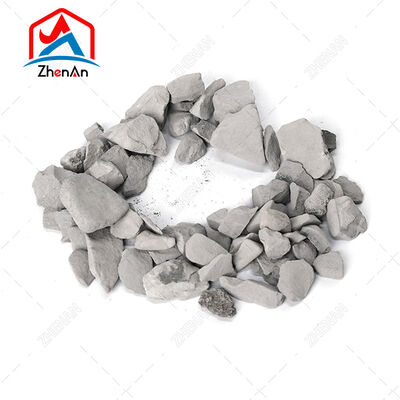
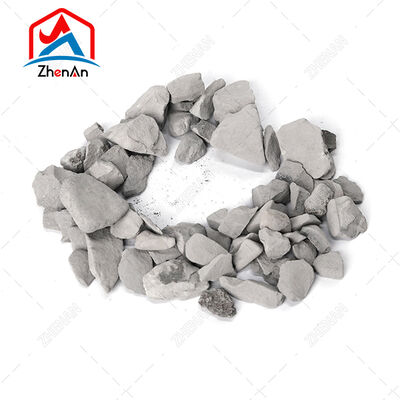
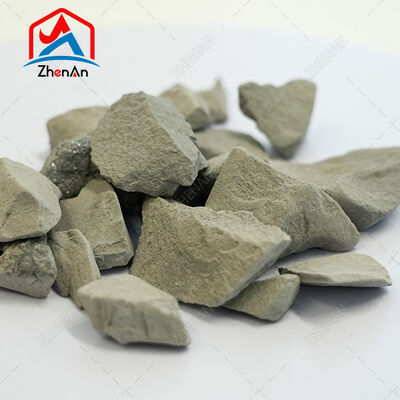
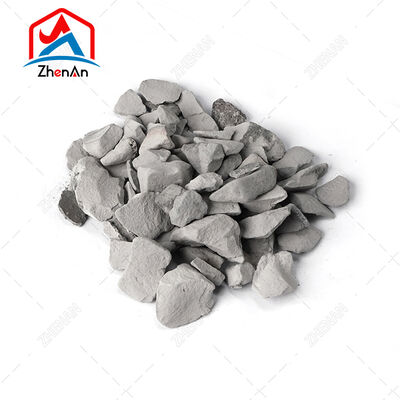
Ferro-siliconnitrium (FeSiN) is een samengesteld legeringsmateriaal datsilicium, stikstof en ijzerHet wordt veel gebruikt in zowel de staalindustrie als de vuurvaste industrie.stikstofdrager, stabilisator bij hoge temperatuur en structurele versterker, waardoor zowel de eigenschappen van gesmolten metaal als de vuurvaste duurzaamheid worden verbeterd.
In vuurvaste stoffen verhoogt FeSiN de weerstand tegen thermische schokken en scheuren.microstructuurverfijning en stikstofversterking, waardoor het een multifunctioneel toevoegingsmiddel is voor moderne metallurgische processen.
Wat zijn de typische specificaties van FeSiN?
| Parameter |
Specificatiebereik |
| Silicon (Si) |
40 ∼ 60% |
| Stikstof (N) |
2035% |
| IJzer (Fe) |
Gewicht |
| Carbon (C) |
≤ 1,5% |
| Partikelgrootte |
10·50 mm / op maat |
| Bulkdichtheid |
2.5·3,2 g/cm3 |
| Formulier |
Bloem / korrel |
| Toepassing |
Brandvaste stoffen + staalindustrie |
Hoe verbetert FeSiN de vuurvaste prestaties?
FeSiN verbetert de vuurvaste materialen aanzienlijk door hunthermische schokbestendigheid en structurele integriteitWanneer stikstof in vuurvaste bakstenen of kaststenen wordt opgenomen, reageert het met silicium om stabiele fasen te vormen die de bindsterkte verhogen.
Dit resulteert in een verminderde scheurvorming bij snelle temperatuursveranderingen.die vuurvaste stoffen in staat stellen hun prestaties gedurende langere bedrijfsprocessen in ovens te behouden, potjes en ovens.
Waarom is FeSiN effectief als anti-crack materiaal?
Het scheuren in vuurvaste stoffen wordt meestal veroorzaakt door thermische uitbreidingsmismatch en zwakke bindingsstructuren.krachtige keramische bindfasendie de flexibiliteit en de weerstand tegen stress verbeteren.
De stikstofcomponent helpt de interne structuur te stabiliseren en voorkomt de verspreiding van microkraak.langere levensduur, minder uitschakelingen en een lagere vervangingsfrequentie.
Hoe werkt FeSiN in een omgeving met hoge temperaturen?
FeSiN behoudt een uitstekende stabiliteit bij temperaturen hoger dan 1400°C. De structuur is bestand tegen oxidatie en chemische aanvallen, waardoor het geschikt is voor harde metallurgische omgevingen.
In staalovens overleeft FeSiN niet alleen extreme temperaturen, maar draagt het ook bij tot deschone staalproductiedoor op gecontroleerde wijze stikstof vrij te geven, waardoor de metallurgische efficiëntie wordt verbeterd.
Vergelijking van de FeSiN-klasse
FeSiN 30 vs FeSiN 20: Wat is beter voor vuurvaste stoffen?
FeSiN 30 bevat een hoger stikstofgehalte, waardoor het krachtiger tegen scheuren werkt en beter bestand is tegen thermische schokken.hoogwaardige vuurvaste toepassingen.
FeSiN 20 is kosteneffectiever en geschikt voor standaard vuurvaste materialen waar matige prestaties aanvaardbaar zijn.
FeSiN versus siliciumnitried: wat is het verschil?
FeSiN bevat ijzer, waardoor het gemakkelijker in metallurgische systemen kan worden geïntegreerd en kostenefficiënter voor bulkgebruik.
Puur siliciumnitried biedt een hogere keramische prestaties, maar is aanzienlijk duurder en wordt voornamelijk gebruikt in geavanceerde ingenieurskeramiek in plaats van industriële vuurvaste stoffen.
FeSiN versus ferrosilicium: waarom is FeSiN beter voor vuurvaste toepassingen?
Ferrosilicium fungeert hoofdzakelijk als een ontoxiderend middel en levert geen stikstofversterking.
FeSiN levert zowel silicium als stikstof.structurele versterking en verbeterde hoge-temperatuurweerstand, waardoor het superieur is voor vuurvaste toepassingen.
Wat is het uiteindelijke voordeel van het gebruik van FeSiN?
FeSiN combineert metallurgische en vuurvaste voordelen:
- Verbetert de vuurvaste levensduur
- vermindert kraken en thermische schade
- verbetert de kwaliteit van staal door stikstofcontrole
- vermindert de totale productie- en onderhoudskosten


 Uw bericht moet tussen de 20-3.000 tekens bevatten!
 Dutch
Dutch